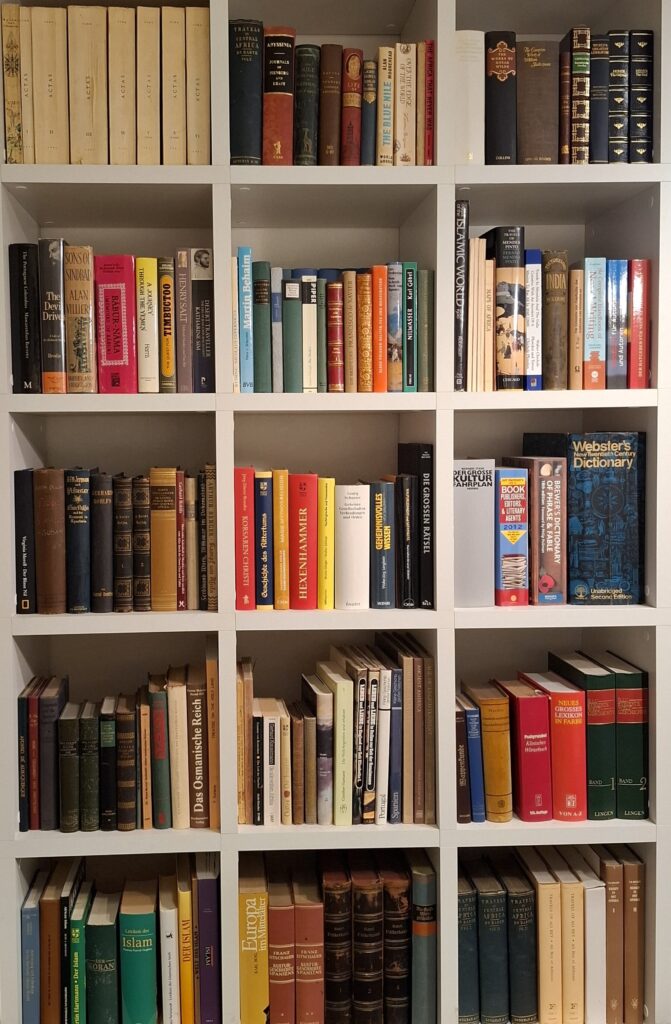
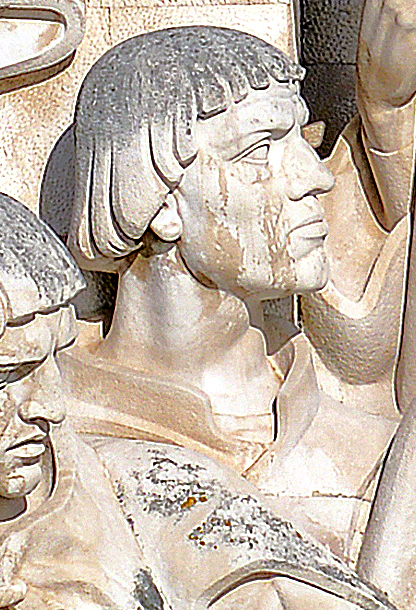
Figure of Pêro da Covilhã on the Padrão dos Descobrimentos in Lisbon.
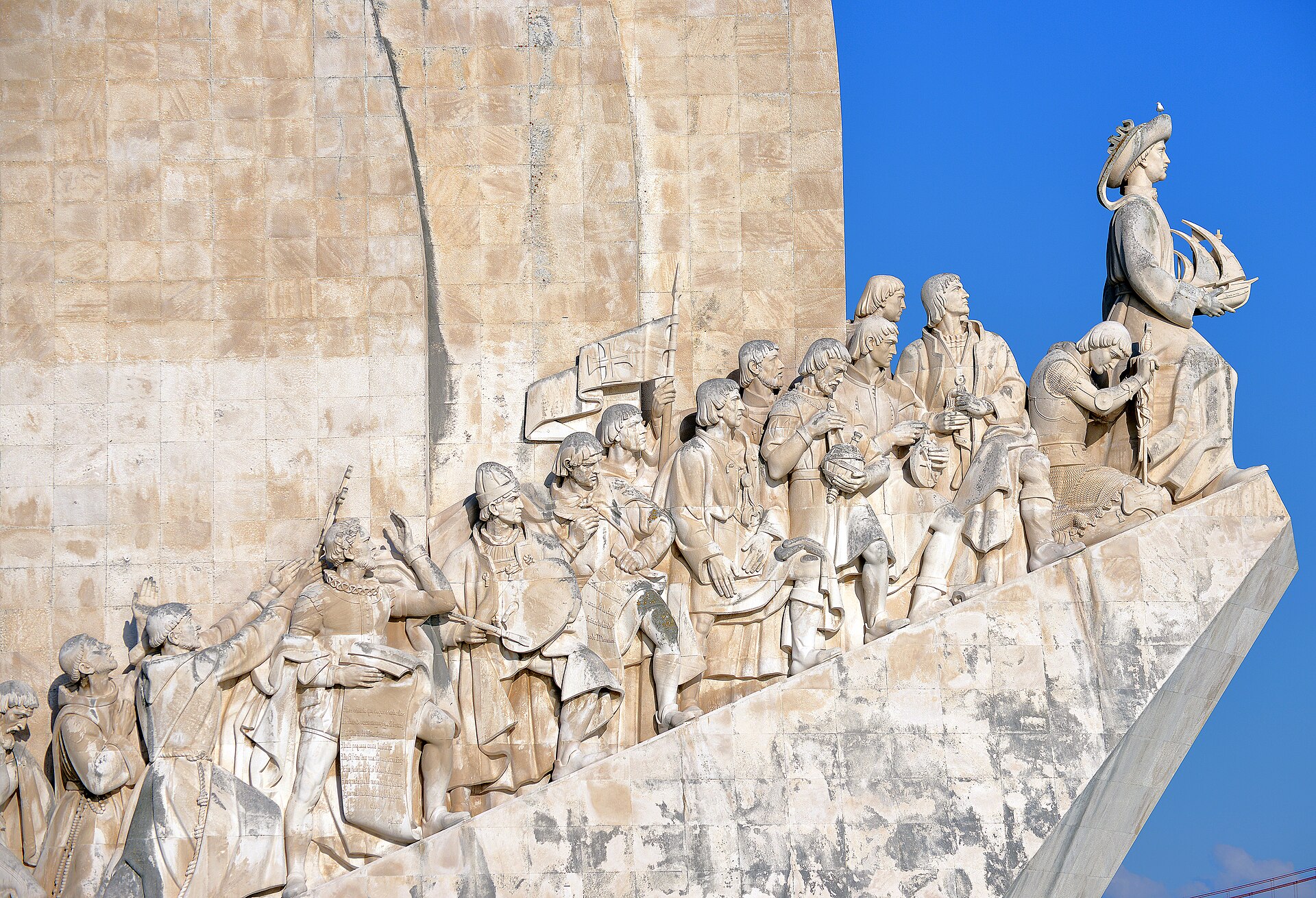
Pêro da Covilhã is the ninth explorer from the right on this side of the Padrão dos Descobrimentos (Monument of the Discoveries) on the north bank ot the Tejo (Tegus) estuary in Santa Maria de Belém, Lisbon.
The Real
Pêro da Covilhã
Pêro da Covilhã reached India a decade before Vasco da Gama. Uncover the true historical dossier behind the fiction at perodacovilha.com, the upcoming archive featuring original works.
The Real
Pêro da Covilhã
Pêro da Covilhã reached India a decade before Vasco da Gama. Uncover the true historical dossier behind the fiction at perodacovilha.com, the upcoming archive featuring original works.
Figure of Pêro da Covilhã on the Padrão dos Descobrimentos in Lisbon.
Pêro da Covilhã is the ninth explorer from the right on this side of the Padrão dos Descobrimentos (Monument of the Discoveries) on the north bank ot the Tejo (Tegus) estuary in Santa Maria de Belém, Lisbon.
Who Was the Historical
Pêro da Covilhã?
A Diplomat
Pêro da Covilhã was a diplomat,
a royal envoy. He succeeded against all odds to secure a Treaty of Friendship with Abū Thābet, the Sultan of Tlemcen.
An Agent
Nominally an escudeiro da Guarda Real, a squire of the Royal Guard,
Pêro da Covilhã’s real charge was to speak, spy, and kill for the Portuguese Crown.
An Explorer
In the Highlands of Ethiopia,
Pêro da Covilhã found the fabulous Prester John, who turned out to be the Negusä Nägäst, the King of Kings of Abyssinia.
Why Was Covilhã’s True Mission
Erased from History?
While the epic Covilhã’s Secret Journal series explores the undocumented shadows of his mission, the verified historical record is little more than a sprawling itinerary connecting the most dangerous edges of the known world. To understand Pêro da Covilhã’s legacy, however, we must accept two painful historical truths:
Because of this decreed secrecy, the surviving archival records offer only glimpses of the truth, obscured by centuries of myth and royal conceit. It is within these historical blind spots that the true scale of the epic reveals itself.
Documented History
A comprehensive historical dossier—featuring original works, translated manuscripts, cartography, and exclusive 16th-century illustrations—is currently being assembled at perodacovilha.com.
The Research Documents
Practically all known monographs, relations, chronologies, and historical documents relevant to Pêro da Covilhã reside in my private library. The original manuscripts and the absolute rarest print editions, however, remain under lock and key in archives like the Portuguese national Torre do Tombo.
Eyewitnesses
The only truly firsthand report by a contemporary is the account by Father Francisco Álvares regarding the 1520–1526 Portuguese mission to Abyssinia. Álvares found Covilhã acting as a highly-respected advisor at the court of the King of Kings and devoted an entire chapter to him. An excellent Hakluyt Society translation forms a cornerstone of my research.
Monographs
To this day, the definitive biography of our spy remains the masterful work by the Conde de Ficalho. Published in 1898, this Portuguese text has never been translated into English. For over a century, scholars have relied on Ficalho’s meticulous research to piece together Covilhã’s footsteps—leaving modern English readers largely in the dark until now.
Chronologies
In a 1950 facsimile edition of Cronica de El-Rei D. Joao II by Rui de Pina—a contemporary of Covilhã—the chronicler cryptically refers to him as “Joham de Covilhaã,” intentionally or not. Meanwhile, a 1973 facsimile edition of Garcia de Resende’s own Cronica explicitly details how “Ioam de Couilham” was covertly dispatched by the King to India overland.
Other Sources
João de Barros, often called the “Portuguese Livy,” is a major early secondary source. His monumental 1552 Décadas da Ásia relied heavily on classified firsthand accounts from the royal archives. Because later centuries of scholarship offer little new evidence beyond these original chronicles, these foundational texts remain the true lifeblood of the novels.
My Private Library
This is where my historical archive of 2,000 books and maps is kept: spread over six bookcases in two rooms. And finding a specific book can be a challenge: I should have firmly applied the Dewey Decimal Classification system, but couldn’t live with ugly labels on the spines of seventeenth-century vellum-bound codices—or putting five-by-eight trade paperbacks next to them.
The Reading Room
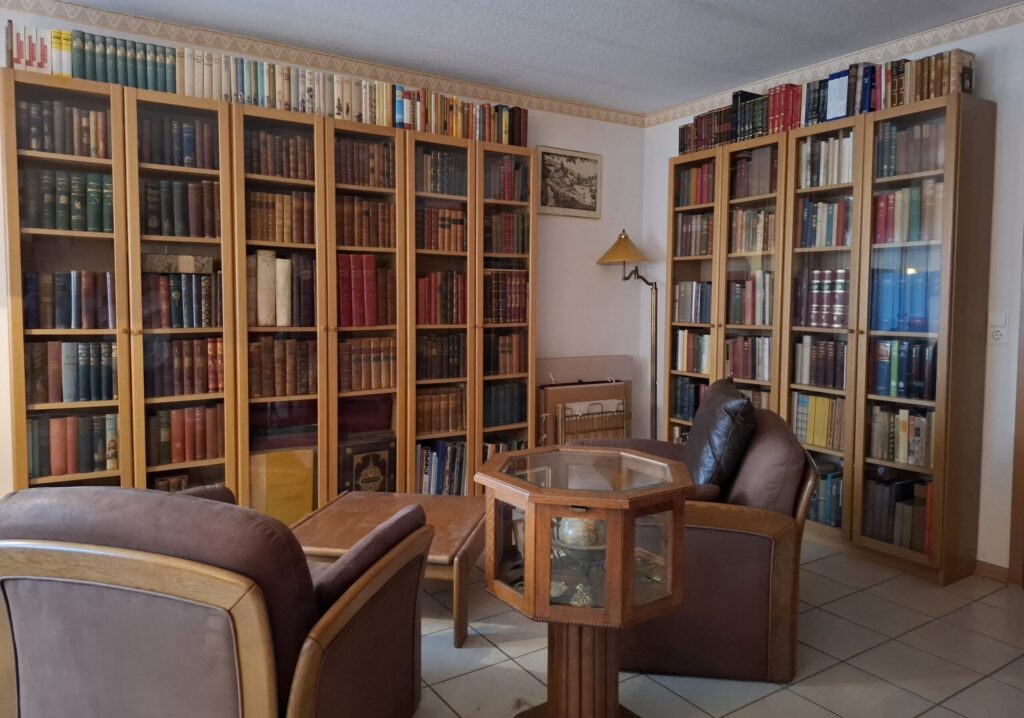
The shelves in the library room hold the oldest—and most beautiful—chronologies centering on Pêro da Covilhã, the era of Portuguese discoveries, as well as old travel accounts on the cultures of the places Pêro visited,
Size Matters
An old bookcase must endure the indignity of bearing books sorted by size, not age.
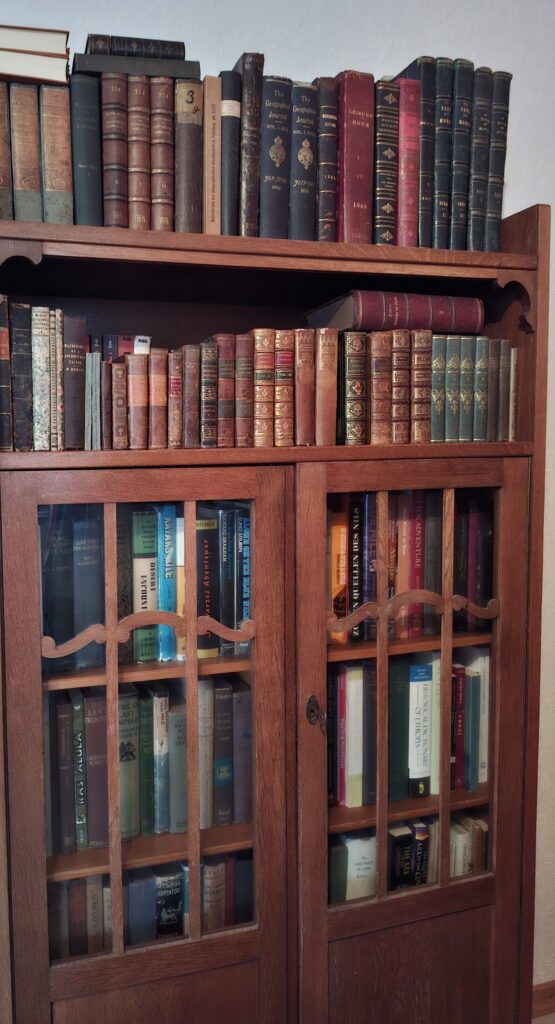
The Scriptorium
This is the editorial room where my co-author and I do the actual work: writing, rewriting, and swatting at superfluous commas.
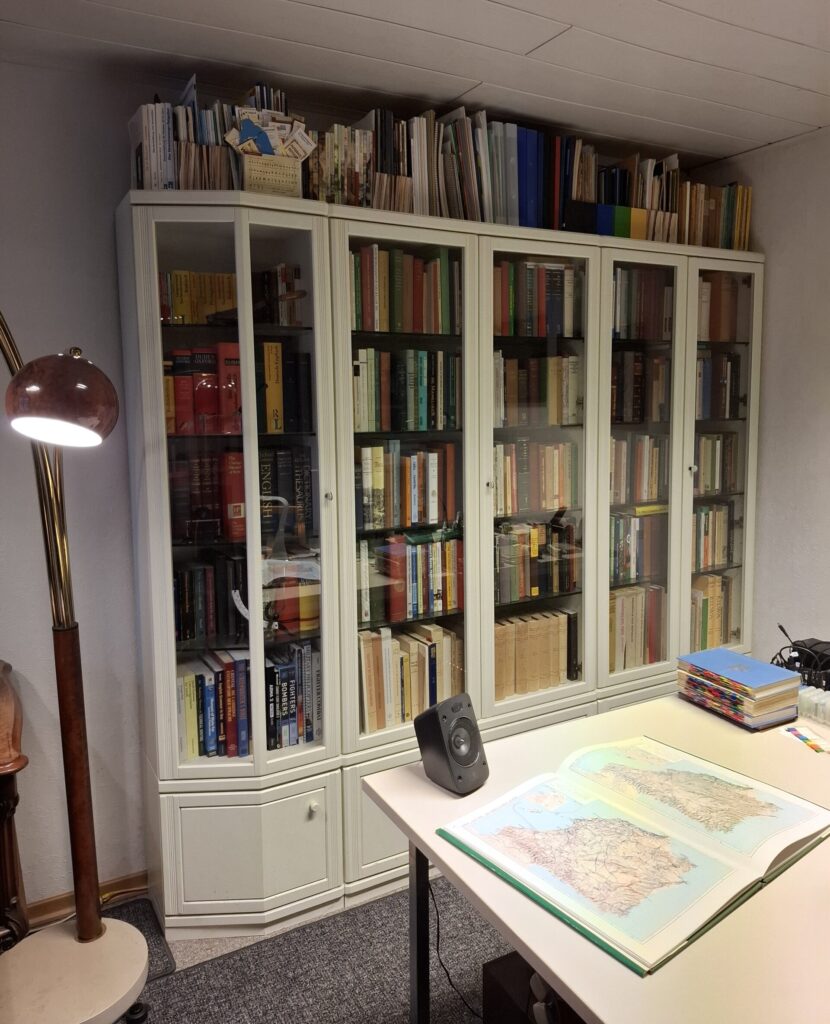
We keep the books we use the most close at hand.
In our digital age, most old books have been scanned and are available online—but not all. Living in the Old World allows me to travel to countless historic European towns and rummage through their antiquarian bookshops, where I still occasionally unearth a rare, overlooked jewel.
Books and More Books
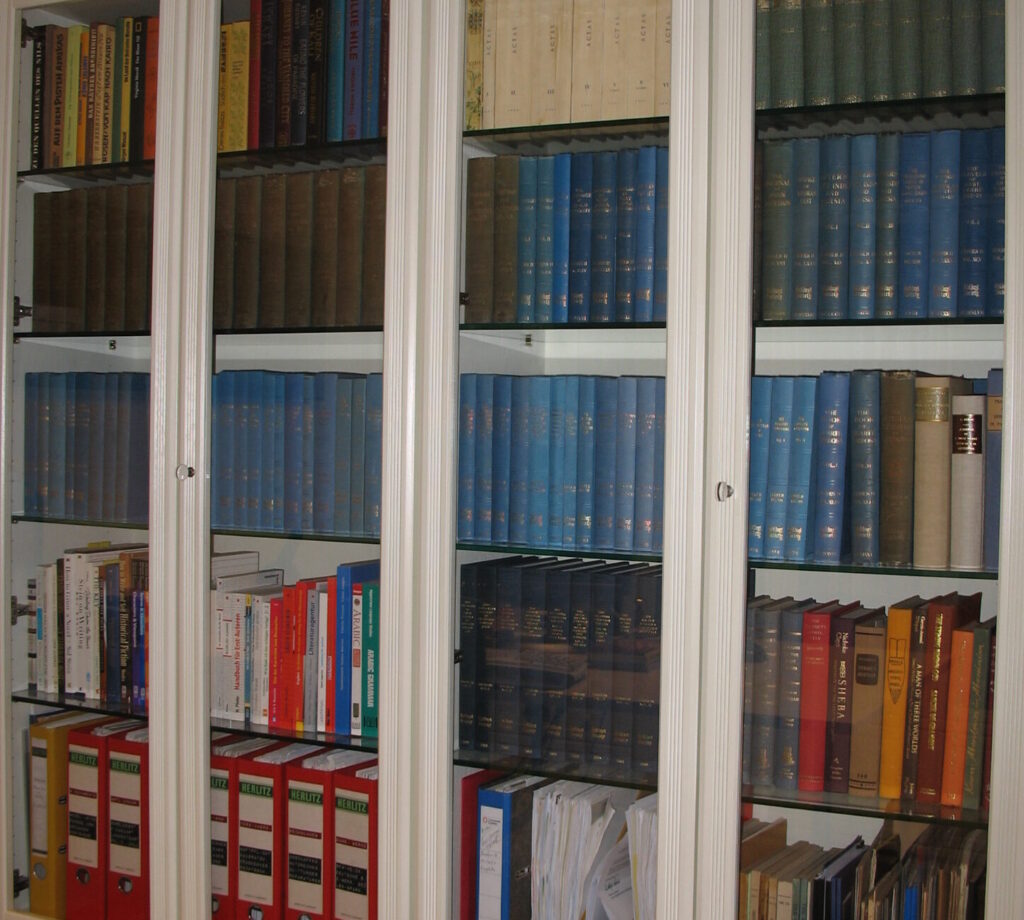
Above: research tomes, often multi-volume series, need a place of their own.
Below: aesthetically speaking, some books just don’t rate being behind glass.